

Product Overview
Technical Summary
| Parameter | Value |
|---|---|
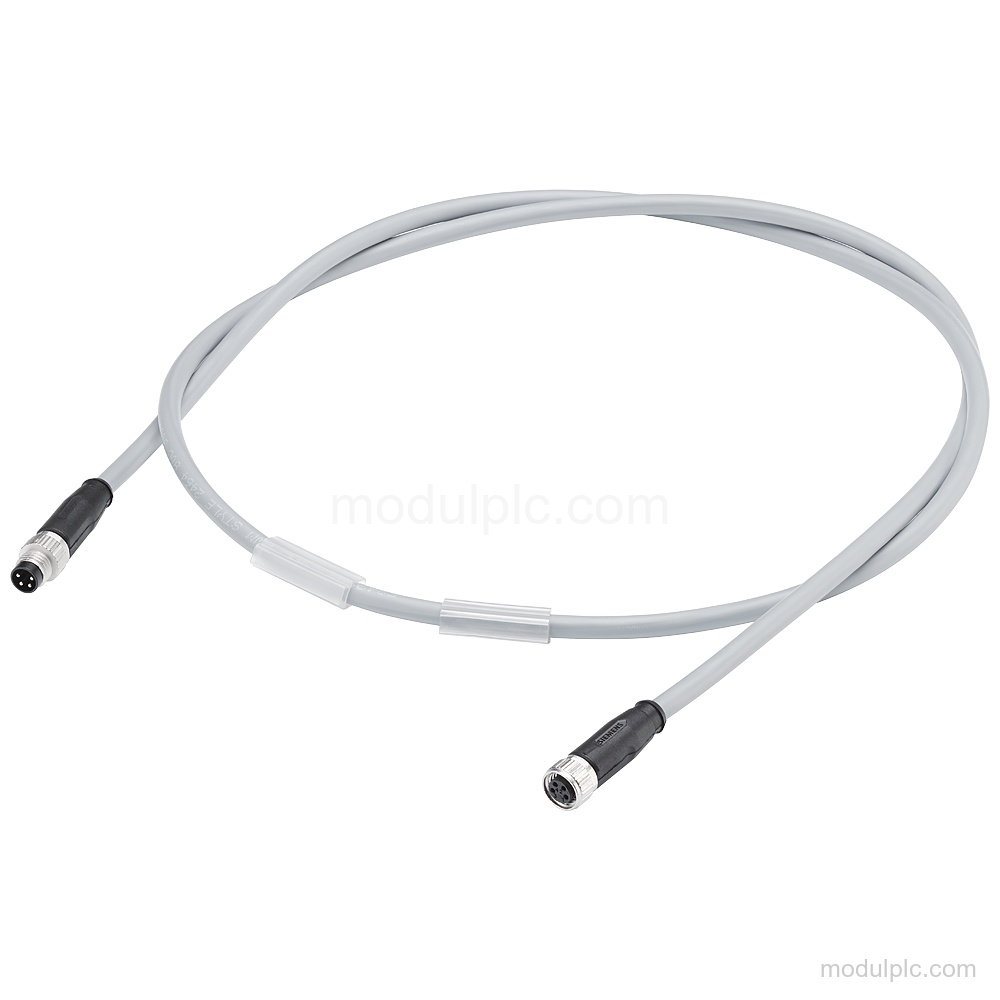
| Product type | Bus cable |
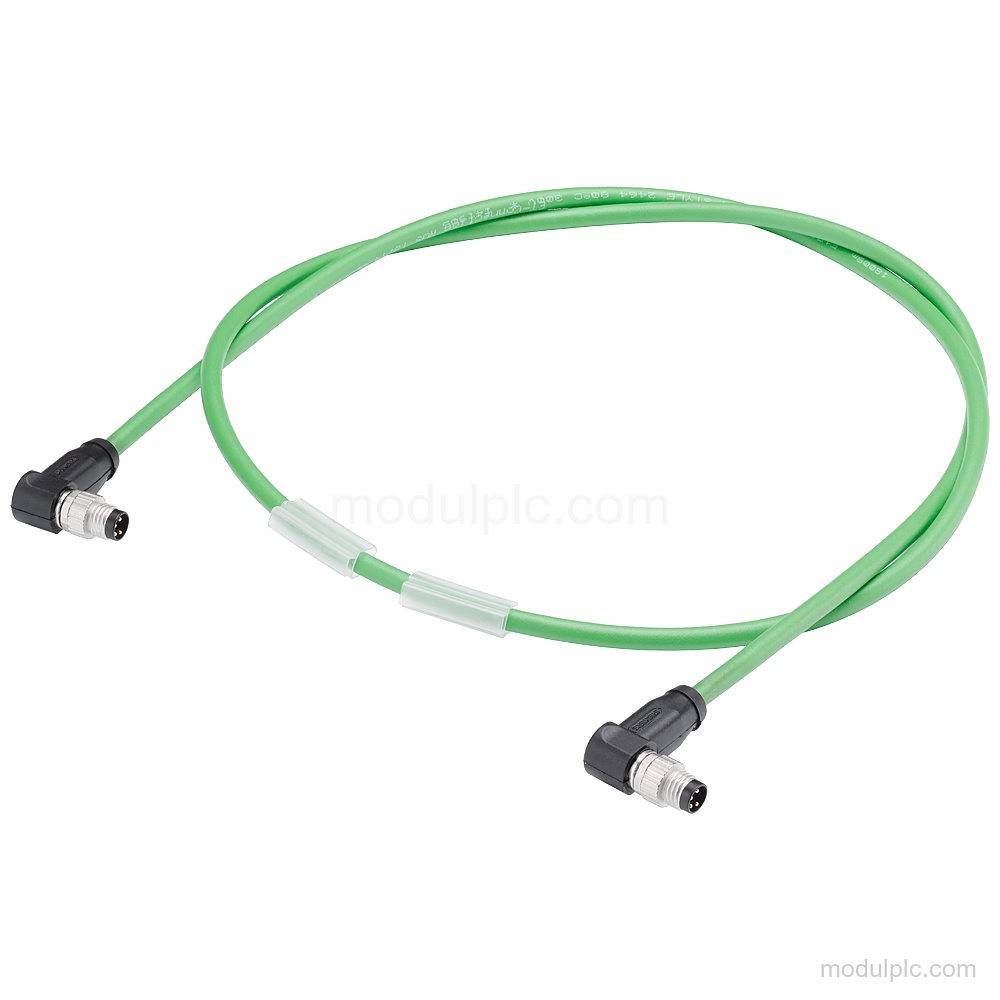
| Connections | 2x angled 4-pole M8 plugs, preassembled at both ends |
| Electrical cores | 4 |
| Cable sheath material | PUR |
| IP degree of protection | IP65/67 |
| Minimum bending radius, single bend | 20 mm |
| Minimum bending radius, multiple bends | 40 mm |
| Bending radius for continuous bending | 100 mm |
| Ambient temperature during assembly | -30 °C to 80 °C |
| Ambient temperature during storage/transportation | -40 °C to 80 °C |
| Cable designation | 2Y(ST)C11Y 2x2x0.5/1.0-100-GN |
Applications
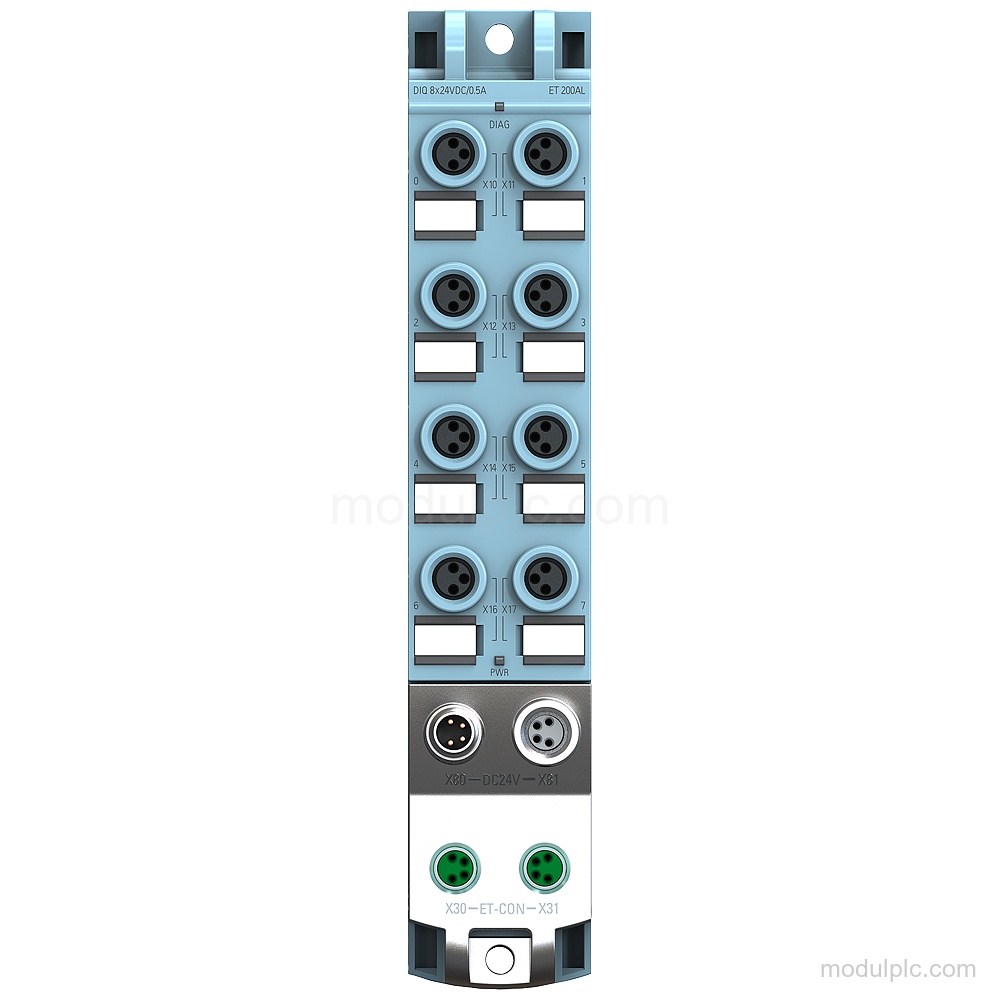
- Connecting ET-CONNECTION nodes: Connects ET-CONNECTION nodes, such as SIMATIC ET 200AL, in degree of protection IP65 / 67.
Key Features
- Bus cable design: Flexible 4-core cable with a 15 m length, green PUR sheath, and 90 degree cable outlet.
- M8 connections: Preassembled at both ends with 2x angled 4-pole M8 plugs.
- Shielding: Shielded with overlapped aluminum-clad foil covered by a braid of tin-plated copper wires.
- ET-CONNECTION suitability: For connecting ET-CONNECTION nodes, such as SIMATIC ET 200AL, in degree of protection IP65 / 67.
- Cable construction: Cable designation: 2Y(ST)C11Y 2x2x0.5/1.0-100-GN; the cable has 4 electrical cores and is halogen-free and silicone-free.
- Bending limits: Minimum permissible bending radius is 20 mm for a single bend and 40 mm for multiple bends; the bending radius for continuous bending is 100 mm.
Frequently Asked Questions
1. What is the function of the Siemens 6ES7194-2MN15-0AB0?
It is a bus cable for connecting ET-CONNECTION nodes.
2. How is the cable connected?
It is preassembled at both ends with 2x angled 4-pole M8 plugs.
3. What is the cable length and core count?
The cable length is 15 m and it has 4 electrical cores.
4. What protection level is supported for ET-CONNECTION nodes?
It is for connecting ET-CONNECTION nodes, such as SIMATIC ET 200AL, in degree of protection IP65 / 67.
5. What bending radius must be checked before ordering?
The minimum permissible bending radius is 20 mm for a single bend and 40 mm for multiple bends; continuous bending requires a 100 mm bending radius.