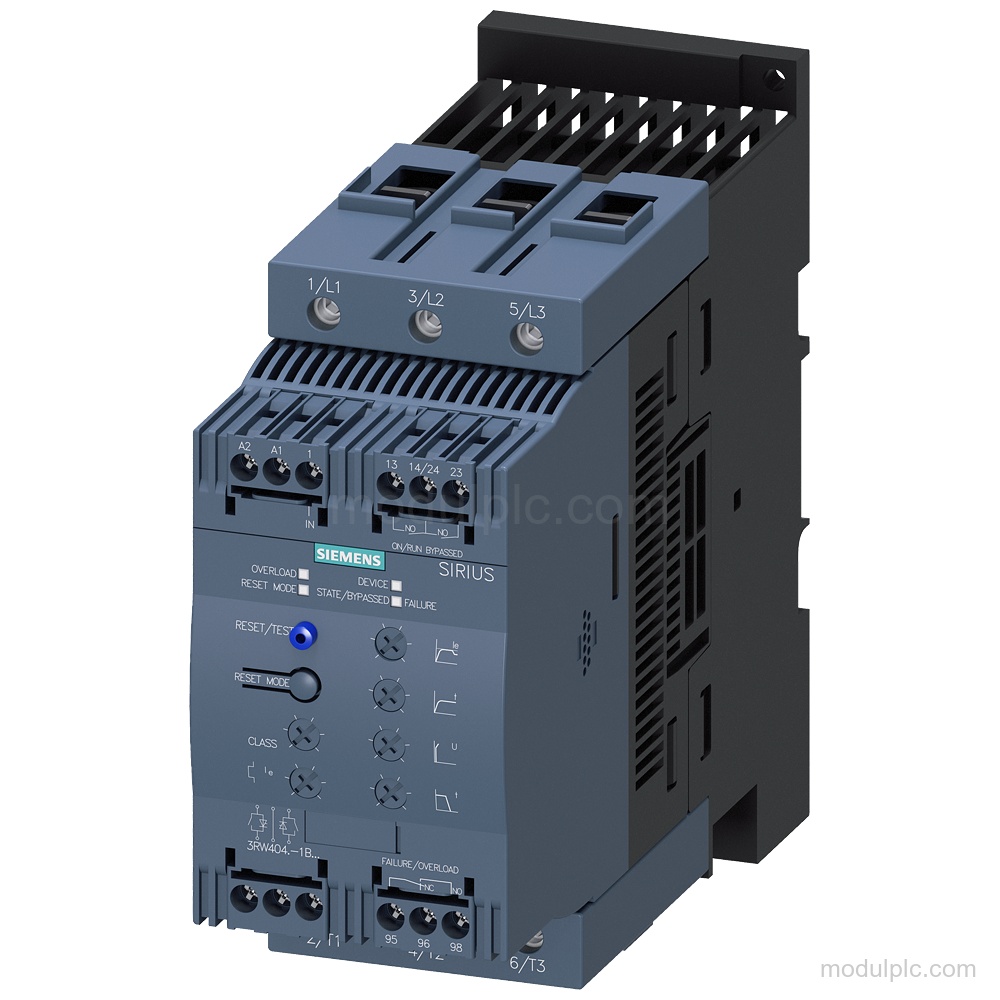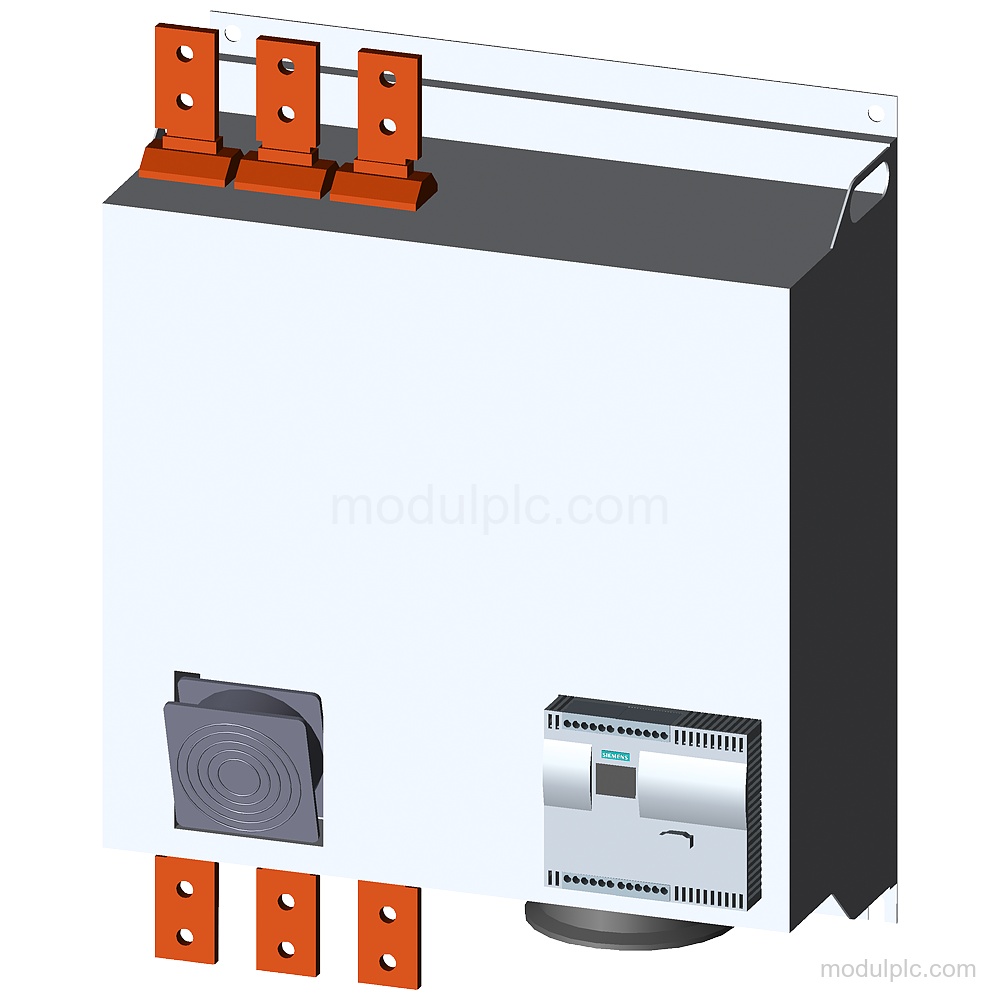


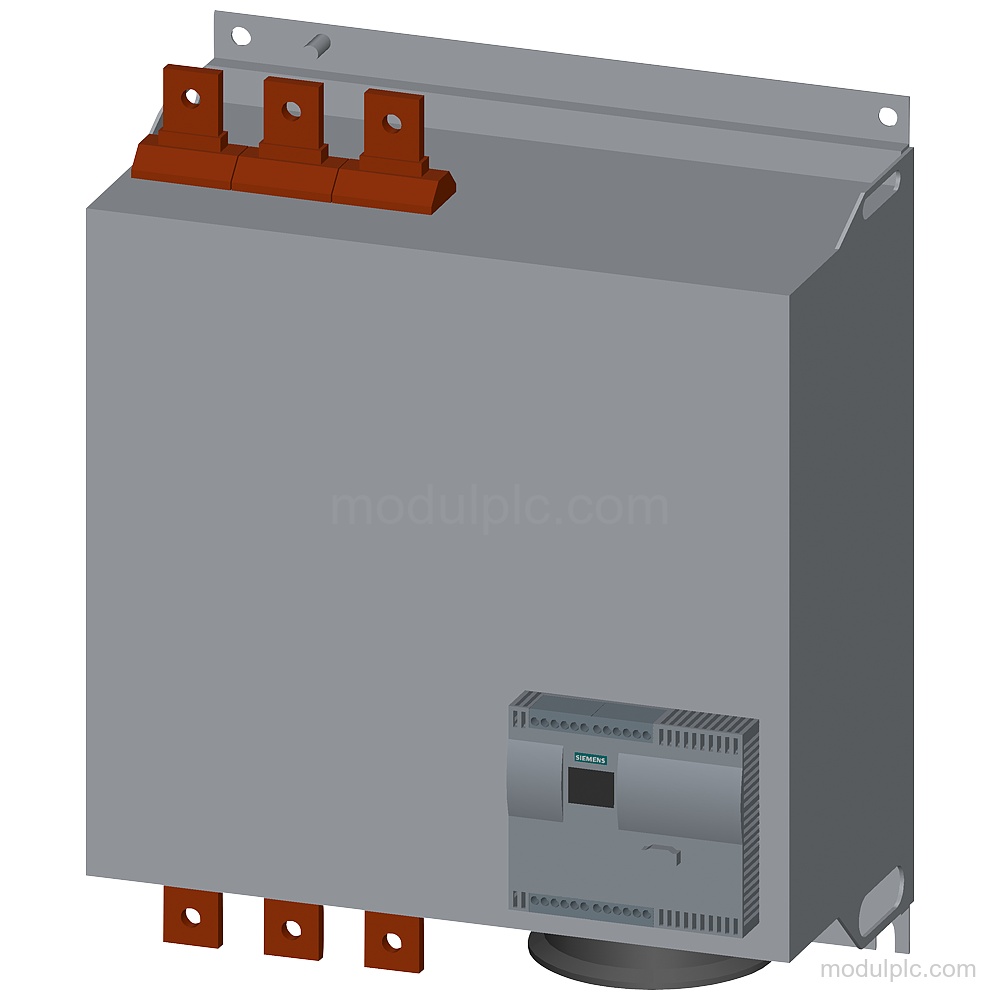
Product Overview
Technical Summary
| Parameter | Value |
|---|---|
| Rated operational current at 40 °C | 780 A |
| Rated operational current at 50 °C | 693 A |
| Rated operational current at 60 °C | 615 A |
| Inside-delta operational current at 40 °C | 1 351 A |
| Operating voltage | 200 … 460 V |
| Operating frequency | 50 … 60 Hz |
| Control supply | 230 V AC at 50 Hz or 60 Hz |
| Main current connection | busbar connection |
| Auxiliary and control connection | screw-type terminals |
| Front protection class | IP00 |
Key Features
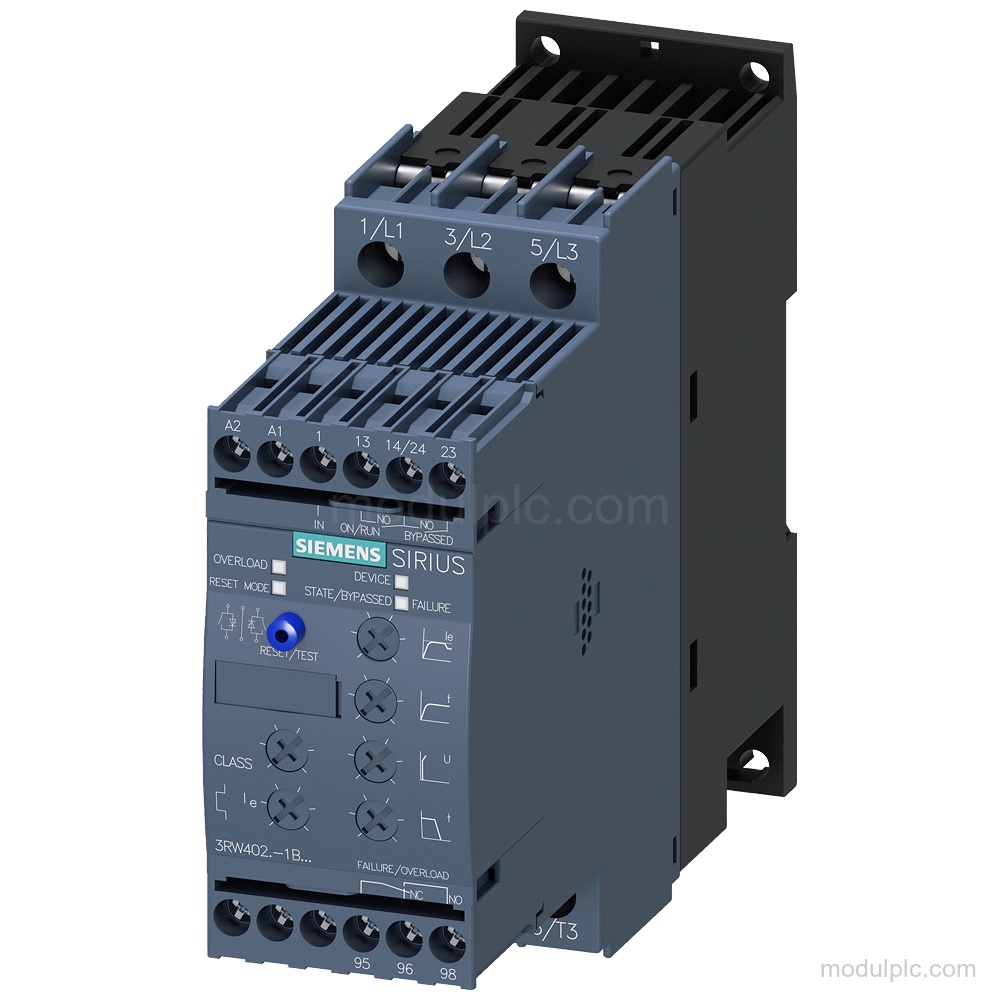
- Soft starter protection and control: Has an integrated bypass contact system, thyristors, intrinsic device protection, motor overload protection, thermistor motor protection evaluation, external reset, and adjustable current limitation.
- Rated operational current: Rated operational current is 780 A at 40 °C, 693 A at 50 °C, and 615 A at 60 °C.
- Inside-delta operation: Inside-delta circuit supports 1 351 A at 40 °C, 1 200 A at 50 °C, and 1 065 A at 60 °C; minimum load is 8 %.
- Operating voltage and control supply: Operating voltage is 200 … 460 V with -15 % relative negative tolerance and 10 % relative positive tolerance. Control supply is 230 V AC at 50 Hz or 60 Hz, with -15 % and 10 % voltage tolerances.
- Connections and mounting: The main current circuit uses a busbar connection; auxiliary and control circuits use screw-type terminals. Fastening is by screw fixing, with a 510 mm width, 640 mm height, and 290 mm depth.
Frequently Asked Questions
1. What type of device is Siemens 3RW4456-6BC44?
It is a SIRIUS soft starter with an integrated bypass contact system, thyristors, intrinsic device protection, motor overload protection, and adjustable current limitation.
2. What current does the 3RW4456-6BC44 support?
It has a rated operational current of 780 A at 40 °C, 693 A at 50 °C, and 615 A at 60 °C. In the inside-delta circuit, the values are 1 351 A, 1 200 A, and 1 065 A at 40 °C, 50 °C, and 60 °C.
3. How is Siemens 3RW4456-6BC44 connected and mounted?
The main current circuit uses a busbar connection, while auxiliary and control circuits use screw-type terminals. Fastening is by screw fixing.